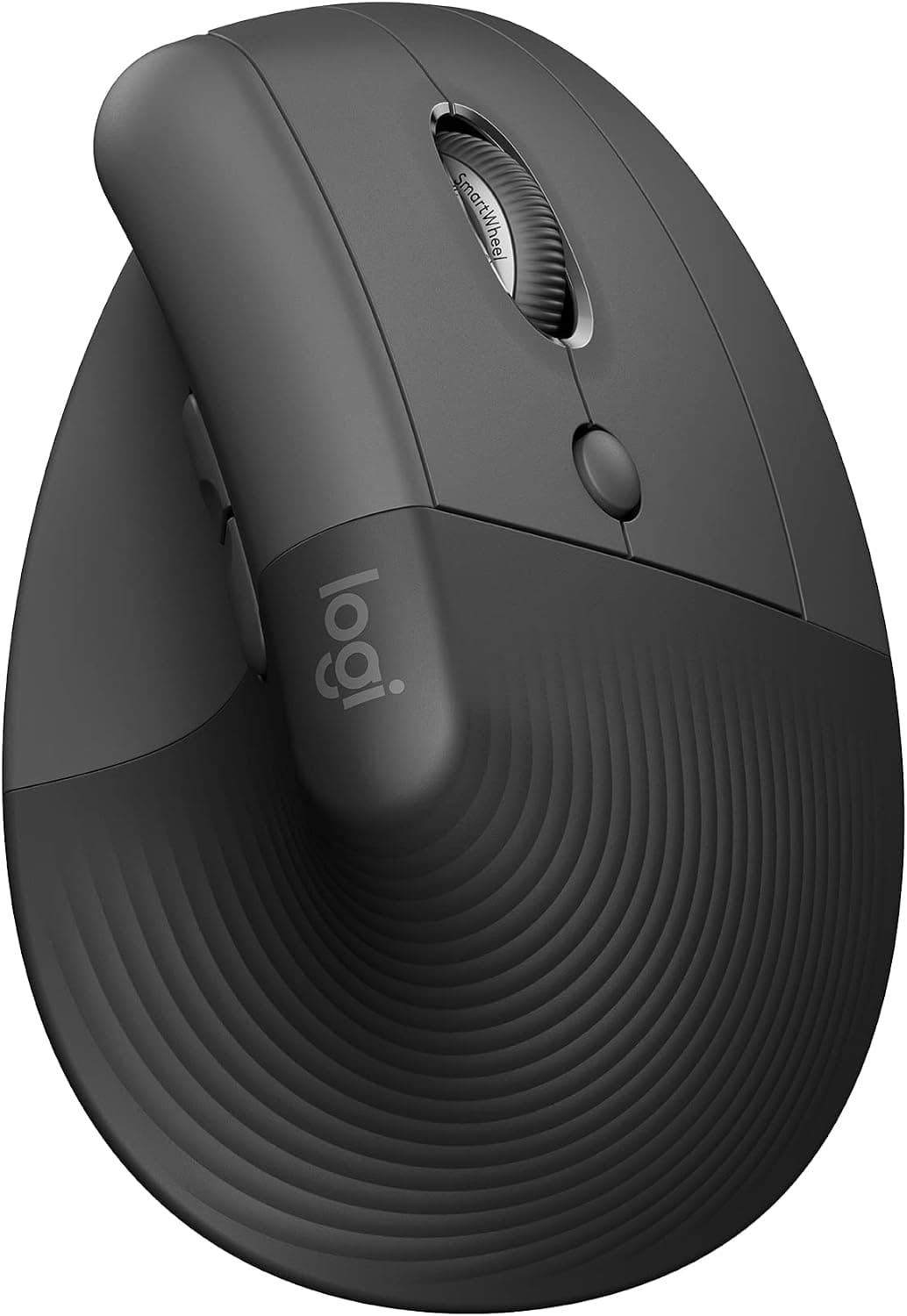
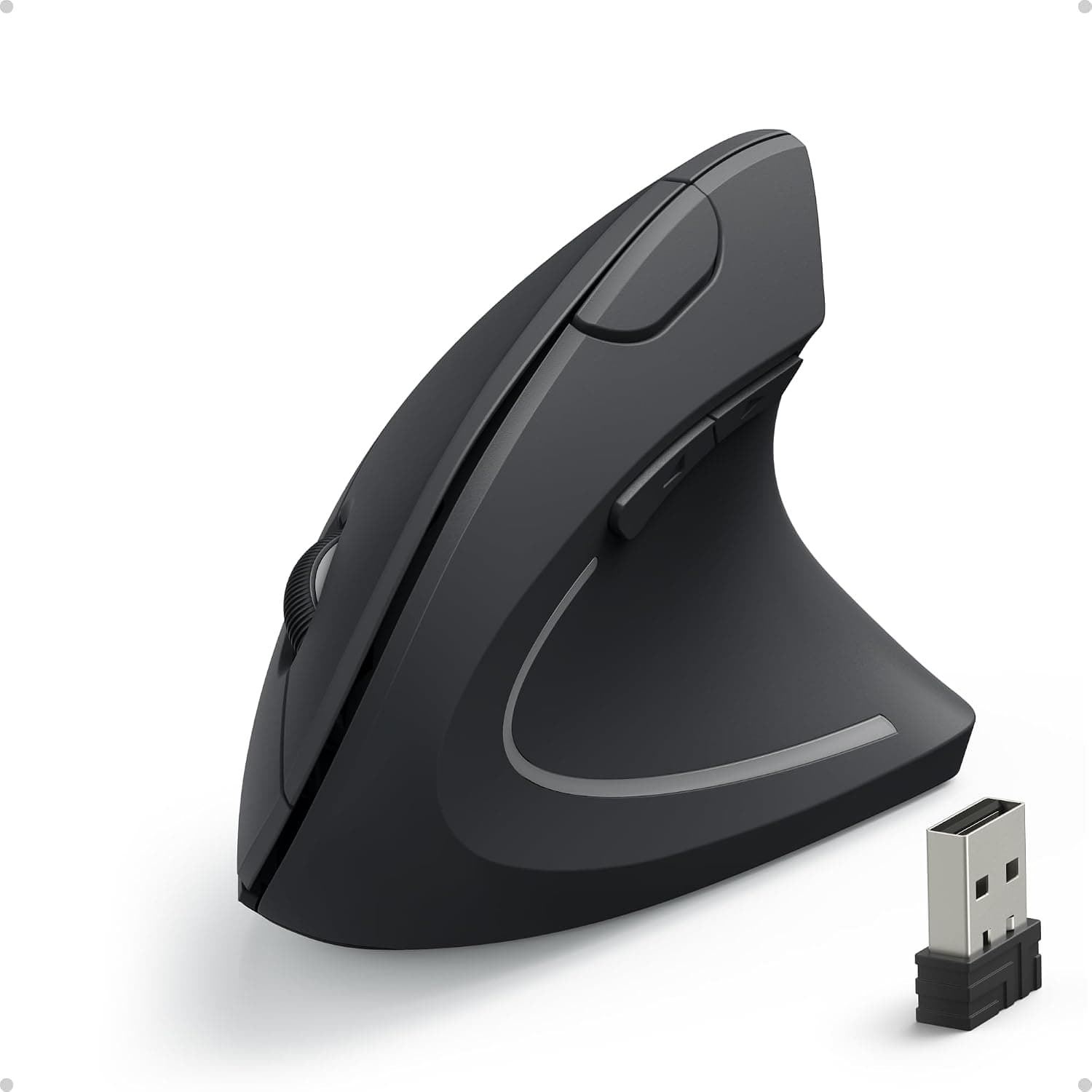
Logitech Lift vs Anker 2.4G Wireless Ergonomic Mouse
In a Logitech Lift vs Anker vertical mouse small hands comparison, the Lift is the smaller listed shell: 4.3 by 2.7 inches and a small-to-medium right-hand sentence, against the Anker listing at 4.72 by 2.94 inches. If your hand is under 6.7 inches, start with the Lift, then use the decision guide if a third shell is still in play.
As an Amazon Associate I earn from qualifying purchases.
The listed footprint is the difference you can check
Both pages sell a right-hand vertical mouse. That shared label is not a tie. Put the product-detail rows on one line and the bodies are not the same size. The Lift row reads 4.3 inches long by 2.7 inches wide. The Anker row reads 4.72 inches long by 2.94 inches wide. The gap is 0.42 inch in length and 0.24 inch in width. On a short hand, that is the distance between a shell that ends near the fingers and a shell that asks the fingers to travel farther to the buttons.
The 6.7 inch figure on this page is your hand, not a number printed on either listing. Measure from the wrist crease to the tip of the middle finger, the way the measurement page describes, and keep the tape result. If that result is under 6.7 inches, the shorter listed body is the one that matches the constraint. The Lift is that body. The Anker remains a vertical mouse. It is simply the longer and wider of the two rows.
Line
Logitech Lift
Anker 2.4G Wireless Ergonomic Mouse
Length and width
4.3 in by 2.7 in
4.72 in by 2.94 in
Item weight
125 g
4.48 ounces
Angle sentence
57 degrees
Handshake position, no degree printed
Hand sentence
Small to medium right hands
Right hand, in the title
Connection
Bluetooth Low Energy or Logi Bolt
2.4G USB receiver
Buttons
6
5
Sensitivity row
4000 DPI
1600 DPI
Power line
Up to two years of battery life
Two AAA batteries not included
Head-to-head lines taken from the Logitech Lift listing and the Anker 2.4G Wireless Ergonomic Mouse listing.
Line: Length and width
Logitech Lift: 4.3 in by 2.7 in
Anker 2.4G Wireless Ergonomic Mouse: 4.72 in by 2.94 in
Line: Item weight
Logitech Lift: 125 g
Anker 2.4G Wireless Ergonomic Mouse: 4.48 ounces
Line: Angle sentence
Logitech Lift: 57 degrees
Anker 2.4G Wireless Ergonomic Mouse: Handshake position, no degree printed
Line: Hand sentence
Logitech Lift: Small to medium right hands
Anker 2.4G Wireless Ergonomic Mouse: Right hand, in the title
Line: Connection
Logitech Lift: Bluetooth Low Energy or Logi Bolt
Anker 2.4G Wireless Ergonomic Mouse: 2.4G USB receiver
Line: Buttons
Logitech Lift: 6
Anker 2.4G Wireless Ergonomic Mouse: 5
Line: Sensitivity row
Logitech Lift: 4000 DPI
Anker 2.4G Wireless Ergonomic Mouse: 1600 DPI
Line: Power line
Logitech Lift: Up to two years of battery life
Anker 2.4G Wireless Ergonomic Mouse: Two AAA batteries not included
Weight almost ties once the units match
The Lift prints grams. The Anker prints ounces. Leaving them in different units makes the Anker look like a different class of object. Multiply 4.48 by 28.35 and you get about 127 grams. The Lift’s 125 g sits two grams away. That is not a reason to pick one shell over the other if your worry is drag. It is a reason to stop treating the ounce figure as if it were four times heavier. The real mass gap in this pair is tiny on the printed numbers. The real size gap is the 0.42 inch of length.
Ounces on a listing can be the shell, the shell plus receiver, or a packed weight. This page does not re-weigh either box. It reports the item-weight row each product page shows, then does the unit conversion in the open so you can repeat it. If you want a mouse whose entire case is a sub-100-gram question, neither of these rows is that mouse. 125 g and about 127 g are both over 100 g. The lightweight page is the place for the 3.52 ounce wired listing.
Only one of them prints 57 degrees
The Lift bullet calls the shape “57 degrees” and says the vertical form is meant to put the forearm in a more natural posture. It also names a snug thumb rest and a softly textured grip. The Anker bullets describe a “handshake” wrist and arm position and say the shape is there to reduce strain. They do not attach a degree number to that handshake. You can believe both pages are describing a vertical hold. You cannot claim the Anker page promised 57 degrees, because that figure is not on it.
A degree number is still not a fit number. The MX Vertical listing, which is not this pair, also prints 57 degrees and then lists a 7.5 by 6 inch body. Inside this pair, the degree line belongs only to the smaller shell. That is useful. It means the mouse that says small to medium is also the mouse that commits to an angle you can picture: more than halfway from flat to upright. The Anker page commits to the handshake phrase, the DPI steps, and the dimensions, and leaves the angle unnumbered.
The receiver and the batteries are a daily difference
The Lift connection bullet offers Bluetooth Low Energy or a Logi Bolt USB receiver, and it names Windows, macOS, iPadOS, Chrome OS, and Linux, plus up to two years of battery life. You are not told the cell type in that bullet. You are told the span. The Anker package bullet says two AAA batteries are not included, the 2.4G receiver is stored in the bottom of the mouse, and an instruction manual is in the box. A separate bullet says the mouse enters a power-saving mode after 8 minutes and wakes when you press the left or right button. The package bullet also extends an 18-month warranty.
If you already live on Bluetooth and you do not want a receiver in a laptop port, the Lift’s bullet is the one that names Bluetooth. If you want a USB receiver you can park inside the mouse, the Anker bullet is the one that describes that pocket. The choice is the port and the cells, not a vague preference for “wireless.” Both are wireless. They are wireless in different ways, and only one of them tells you the batteries are absent from the box.
Buttons, DPI, and the quiet-click claim
The Lift product details list six buttons and a maximum sensitivity of 4000 DPI. The bullets add whisper-quiet clicks, customizable buttons that are easy to reach, and a SmartWheel. The Anker details list five buttons and a maximum sensitivity of 1600 DPI. The bullets spell the steps out as 800, 1200, and 1600, and they mention next and previous buttons for browsing. Five versus six is one extra control on the Lift. 1600 versus 4000 is a higher ceiling on the Lift’s sensitivity row. Neither number tells you how hard the main click is. Click effort is not a row you can use here, so it stays out of the table.
Quiet clicks matter if you share a room. Both pages gesture at comfort. Only the Lift bullet uses “whisper-quiet” for the clicks. The Anker page spends its feature space on the DPI steps, the sleep timer, and the warranty. If sound is your constraint, read the Lift wording and then listen to a click yourself. This page did not record either switch.
Who should open which listing
Open the Lift if your measured hand is under 6.7 inches, you use your right hand, and you want the listing that says small to medium in the same breath as a 4.3 by 2.7 inch body and a 57-degree line. Open the Anker if you have measured the same hand, you accept a body the listing prints as 0.42 inch longer and 0.24 inch wider, and you specifically want the 2.4G receiver that stores in the mouse plus the 800/1200/1600 DPI steps. The Anker is not a bad vertical mouse on its own page. It is the larger footprint in this pair.
A third listing can still beat both on a single axis. The SANWA page prints a 4.13 inch length and puts small and medium hands in the title, which is the comparison on the under 6.5 inch page. That shell is wired. If wireless is required and the hand is short, you are back to the Lift inside this pair. Price is not copied here. The button shows the current Amazon price on the listing itself.
Your limit
What the listings give you
Hand under 6.7 in, right hand
Lift body 4.3 by 2.7 in and a small-to-medium sentence
Same hand, you accept a longer body
Anker body 4.72 by 2.94 in
You need a numbered angle
Lift bullet says 57 degrees
You need the receiver stored in the mouse
Anker bullet describes the 2.4G receiver in the bottom
How the two printed lengths sit against a hand you measured under 6.7 inches.
Your limit: Hand under 6.7 in, right hand
What the listings give you: Lift body 4.3 by 2.7 in and a small-to-medium sentence
Your limit: Same hand, you accept a longer body
What the listings give you: Anker body 4.72 by 2.94 in
Your limit: You need a numbered angle
What the listings give you: Lift bullet says 57 degrees
Your limit: You need the receiver stored in the mouse
What the listings give you: Anker bullet describes the 2.4G receiver in the bottom
What this pair does not settle
Grip texture, scroll resistance, and whether the thumb rest actually unloads a sore tendon are not settled by the two pages. The Lift says the thumb rest is snug. The Anker page does not describe a thumb rest in the bullets used here. If the thumb is the painful part, leave this pair and read the thumb-rest page, where the Lift is set next to the Unimouse and the MX Vertical. This versus page only had to find one real difference. It found several, and the one that picks the winner for a short hand is the body: 4.3 by 2.7 inches against 4.72 by 2.94 inches, with the small-to-medium sentence sitting on the shorter shell.
FAQ
Which mouse is smaller on the listing?
The Logitech Lift. Product details list 4.3 by 2.7 inches. The Anker 2.4G Wireless Ergonomic Mouse lists 4.72 by 2.94 inches. The Lift body is 0.42 inch shorter and 0.24 inch narrower on those rows.
Do the weights separate them?
Barely, once you convert units. The Lift lists 125 g. The Anker lists 4.48 ounces. At 28.35 grams per ounce, 4.48 ounces is about 127 grams. The footprint and the hand sentence are the clearer split.
Does the Anker listing print a degree angle?
The feature bullets describe a handshake position and DPI steps of 800, 1200, and 1600. They do not print a degree number. The Lift bullet names 57 degrees.
Which one should you open if your hand is under 6.7 inches?
Open the Lift. The listing says small to medium right hands, and the body line is the shorter one. Use the decision guide if you also want the SANWA length beside it.
What was not compared in person?
Click sound, glide, and a full day of wear were not compared in person. The differences on this page are the lines each listing prints.
 Petite Wrist Relief